How to Claim Manufactured Home Energy Rebates: A Step-by-Step Guide
September 22, 2026
The true cost of a manufactured home does not end with the purchase price or monthly mortgage payment. Heating, cooling, and hot-water costs continue for as long as you own the home.
That is why available utility rebates and energy-efficient equipment deserve attention before you order a new home or replace equipment in an existing one.
In our recent conversation with Aaron, a field specialist for Comfort Ready Home, we discussed one customer example involving up to $4,160 in combined rebates. We also covered heat pumps, heat-pump water heaters, qualifying equipment, required documentation, and the steps homeowners can take to find available incentives.
Rebate programs are not identical everywhere. Amounts and eligibility depend on your utility provider, location, equipment, installation, and available funding. However, understanding the process can help you avoid leaving money on the table.
A Real Example: Up to $4,160 in Rebates
The example discussed in the video includes three potential incentives:
- $1,600 for a variable-speed heat pump
- $1,560 for a heat-pump water heater
- $1,000 for a manufactured home built to qualifying energy-efficiency specifications
Together, those incentives total up to $4,160.
This is an example—not a universal offer or guaranteed payment. Every utility establishes its own eligibility requirements, approved equipment lists, incentive amounts, and program budgets.
The first step is always to identify the utility serving the home’s location and check its current programs.
What Is Comfort Ready Home?
Comfort Ready Home is a Bonneville Power Administration program focused on residential weatherization, HVAC systems, and high-efficiency water heating throughout the Northwest.
The program helps connect utilities, contractors, and homeowners with information and resources for making homes more comfortable and energy efficient.
Comfort Ready Home does not mean that every homeowner automatically receives the same rebate. Local utilities determine which incentives they offer and how customers qualify.
Why Heat Pumps Can Reduce Energy Use
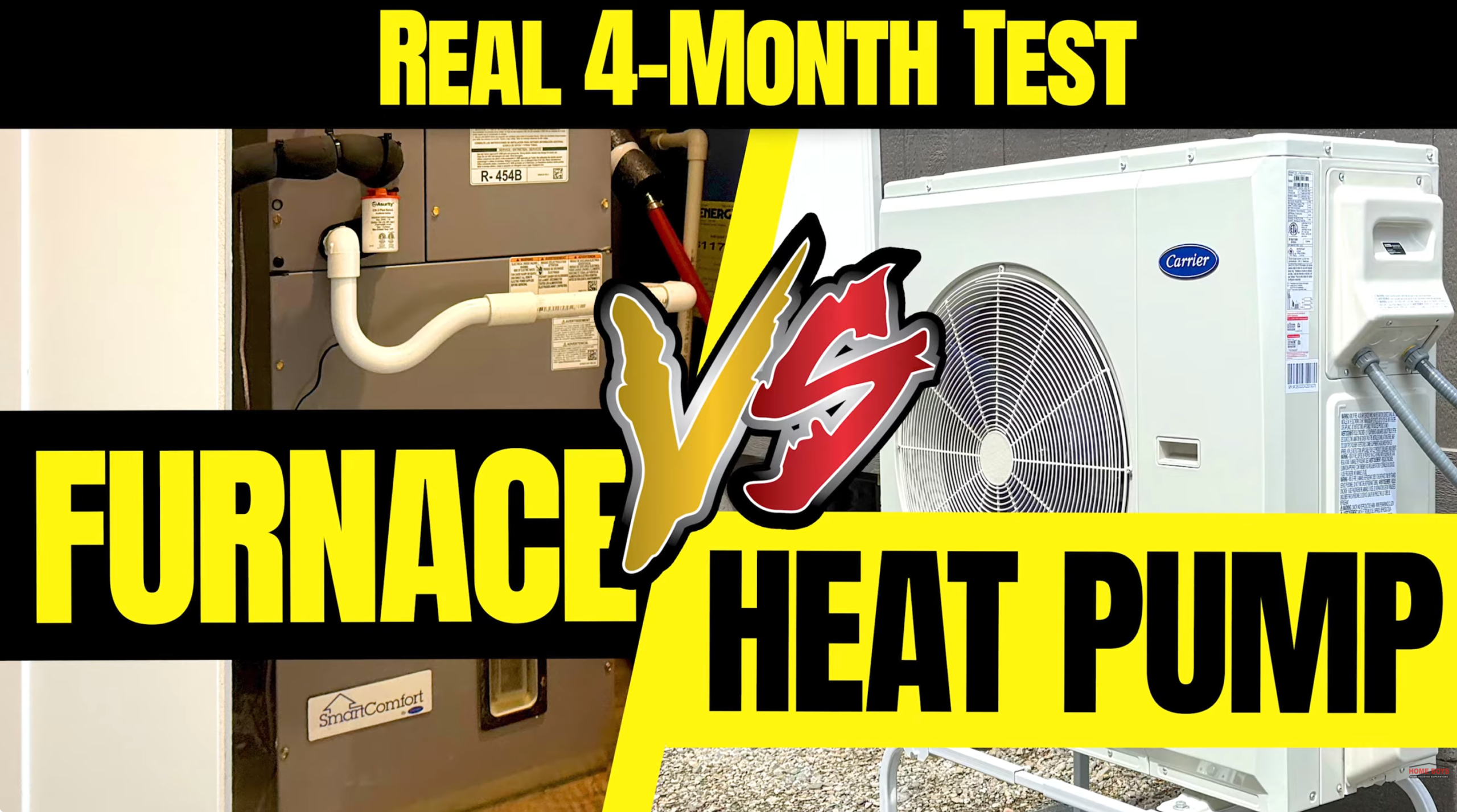
Traditional electric-resistance heating creates heat directly. A heat pump operates differently: it transfers available heat instead of generating all of it through electrical resistance.
During colder months, a heat pump moves heat into the home. During warmer months, it reverses the process and moves heat outside, providing air conditioning.
That means one system can provide both heating and cooling.
Actual savings depend on the home, climate, equipment, electricity rates, temperature settings, insulation, and occupant behavior. In the video, Junior discusses comparisons between similarly sized homes that showed energy savings of approximately 48% to 51%. Those results are examples and should not be treated as a guarantee for every home.
What Is a Heat-Pump Water Heater?
A heat-pump water heater looks similar to a conventional electric water heater, but it includes a small heat-pump system above the tank.
Instead of relying entirely on electric heating elements, it transfers heat from the surrounding air into the water. Many models also retain traditional electric elements for periods of higher demand.
Heat-pump water heaters can also slightly cool and dehumidify the surrounding area. However, they are generally taller than conventional water heaters and require adequate installation space.
BPA’s residential guidance explains that heat-pump water heaters use transferred heat rather than generating all their heat through electrical resistance, allowing them to use considerably less energy than standard electric models. Learn more from BPA’s residential energy-efficiency guide.
How to Claim an Energy Rebate
Although individual programs vary, the process commonly follows these steps.
1. Identify Your Utility Provider
Rebate eligibility usually depends on the utility serving the address where the home will be installed.
Do not assume that an incentive offered in a neighboring city or county is available at your address. Utility territories—and their program budgets—can be different even within the same state.
2. Check Current Rebates Before Purchasing Equipment
Visit your utility’s website or contact its energy-efficiency department.
Ask about incentives for:
- New manufactured homes
- Heat pumps
- Variable-speed heat pumps
- Heat-pump water heaters
- ENERGY STAR-certified equipment
- Existing-home equipment upgrades
- Self-installed equipment
Confirm whether the program requires preapproval before purchasing or installing anything.
3. Select Qualifying Equipment
The equipment must meet the utility’s current efficiency and installation requirements.
Heat-pump water heaters may need to appear on an approved or qualified product list. Comfort Ready Home’s published guidance, for example, identifies specific qualification and installation requirements for eligible heat-pump water heaters. Review the program’s heat-pump water-heater guidance.
Do not assume that every unit on a store shelf qualifies. Older inventory, used equipment, imported products, or models absent from the required product list may be ineligible.
4. Obtain the AHRI Certificate
A heat-pump system normally includes indoor and outdoor components. These components must be properly matched to achieve the tested efficiency rating.
An AHRI certificate documents that the selected indoor and outdoor equipment has been tested as a compatible system.
Your contractor or equipment distributor should be able to provide this certificate. A claim may be rejected if components are mixed and matched without a valid efficiency rating.
5. Keep the Invoice and Product Documentation
Utilities commonly request documentation such as:
- Completed rebate application
- Itemized purchase or installation invoice
- Equipment model and serial numbers
- AHRI certificate
- Proof that the equipment appears on the required product list
- Installation information
- Proof of the home’s qualifying efficiency certification
Ask the utility exactly what it requires before submitting the claim.
6. Submit the Application
Depending on the utility, you may submit the application through an online rebate portal or by completing a fillable form.
Review every model number and supporting document before submission. Missing or inconsistent information can delay the process.
7. Keep Copies and Follow Up
Save copies of the application, invoice, certificate, product specifications, and correspondence.
If the rebate does not arrive within the expected timeframe, contact the utility with the application or confirmation number.
Common Reasons Rebate Applications Fail
Several avoidable problems can prevent a customer from receiving a rebate:
- Purchasing equipment before confirming eligibility
- Choosing a model that is not on the qualified product list
- Using mismatched indoor and outdoor heat-pump components
- Failing to obtain an AHRI certificate
- Purchasing used or outdated equipment
- Missing invoices or model numbers
- Assuming self-installation is allowed without verifying it
- Missing an application deadline
- Installing equipment outside the qualifying utility territory
A few minutes of research before the purchase can prevent an expensive mistake later.
Can a Rebate Cover the Entire Cost?
Sometimes, but it depends entirely on the program and equipment.
In the video, Aaron describes finding a new heat-pump water heater priced at approximately $1,500 in a utility territory offering an incentive of up to $1,600. The program would not pay more than the eligible cost, but the available rebate could potentially cover the purchase price.
That does not mean every customer can receive a free water heater. Equipment eligibility, installation costs, self-installation rules, funding, and rebate limits differ by utility.
Treat this as a reason to investigate—not as a guaranteed offer.
The “Hidden Mortgage” of Energy Costs
Junior describes high utility costs as a type of hidden mortgage.
The comparison is useful because buyers often focus on the home price while overlooking the monthly cost of heating, cooling, and hot water.
Saving $100 per month means keeping $1,200 per year. Over several years, that ongoing operating cost can significantly affect the household budget.
Energy-efficient equipment can therefore provide two separate financial benefits:
- A possible upfront rebate
- Potentially lower monthly utility costs
The initial rebate gets attention, but long-term energy savings may ultimately be more valuable.
Can Existing Manufactured Homes Qualify?
Potentially, yes.
Some utility programs offer incentives for replacing an existing electric water heater, furnace, or air conditioner with qualifying high-efficiency equipment.
Existing homes can present additional considerations. For example, a heat-pump water heater may be taller than the original unit and require more clearance or ventilation.
Before purchasing equipment, confirm that it will physically fit the available space and meet the program’s installation requirements.
Energy-Efficient New Manufactured Homes
New manufactured homes can be designed around modern energy-efficient equipment from the beginning.
The Northwest Energy Efficient Manufactured Housing Program provides technical specifications and third-party certification for qualifying manufactured homes in the Northwest.
Depending on the manufacturer, floor plan, utility territory, and available programs, buyers may be able to include improved insulation, efficient windows, heat-pump preparation, ENERGY STAR features, or space for a heat-pump water heater.
These decisions are usually easier and less expensive to make before the home enters production.
Frequently Asked Questions
Is every buyer eligible for $4,160?
No. The $4,160 total is a specific example from the video. Eligibility and incentive amounts vary by utility, equipment, home specifications, installation, and available funding.
Where should I begin?
Start with the utility company serving the property address. Review its website or speak with its energy-efficiency department before purchasing equipment.
Do I need an AHRI certificate?
Many heat-pump rebate programs require one. The certificate verifies that the indoor and outdoor components form a properly matched system.
Can I install a heat-pump water heater myself?
Some utility programs permit self-installation, while others require professional installation. Confirm the rules before buying the equipment.
Do used water heaters qualify?
Generally, rebate programs require new, qualifying equipment. Always verify the current rules with your utility.
Can The Home Boys help with the process?
When you purchase a home through The Home Boys, our team can help identify qualifying home options, equipment documentation, and questions to ask your utility. The final approval and payment remain subject to the utility’s program requirements.
Check Before You Buy
Before ordering a manufactured home, heat pump, or heat-pump water heater, ask three questions:
- Which utility serves the property?
- What rebates are currently available?
- What equipment and documentation are required?
The answer could be worth thousands of dollars upfront—and may help reduce your monthly energy costs for years to come.
Planning a new manufactured home? Talk with The Home Boys about available energy-efficient options before your home enters production.